Today, AI agents can talk to each other,
but they can't think together.
The Internet of Cognition is the infrastructure layer that closes this gap, giving agents and humans the ability to share intent, build shared context, and reason collectively.
The problem
A lot of connection,
not a lot of meaning
AI agents today are powerful individuals. They can reason, use tools, write code, analyze data. We've been scaling them vertically, making each one smarter, faster, more capable.
But they work in semantic isolation. Each agent operates within its own boundaries. There is no coordination for shared intent. No creation of shared memory. No way for one agent's breakthrough to inform another's decisions.
Innovation occurs frequently but disappears with the innovator or remains contained within small, isolated groups.
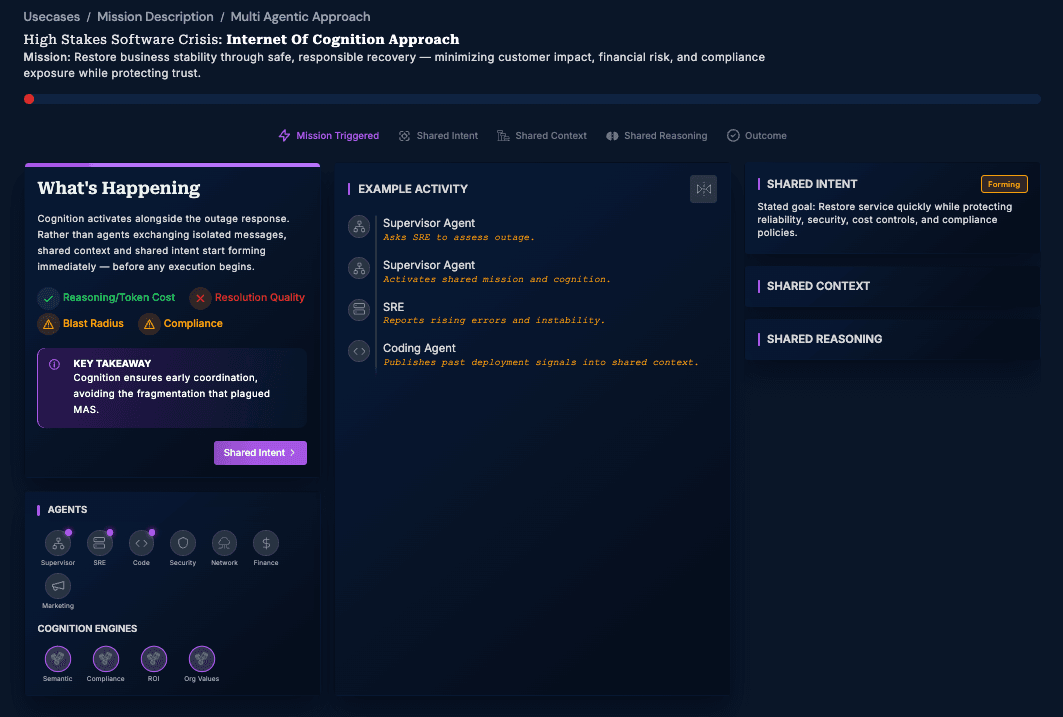
Autonomous agents from different vendors collaborating in real-time to solve a complex outage
Prevent exposure
Minimize instability
Limit losses
Restore availability
Protect brand
Contain impact
The ceiling
Connection is not
collaboration
We've built protocols so agents can talk to each other: MCP, A2A, AGNTCY. This is necessary. But talking is not thinking together.
It's like allowing a Mandarin-speaking Android user to send text messages to a German-speaking iPhone user. The frameworks can connect, minimally, but the users cannot semantically collaborate.
Today's multi-agent infrastructure handles discovery, access control, and message passing. That's necessary but highly insufficient for what comes next.
Coding Agent
Deploy Instance with Fix
SRE Agent
Provisioning Lambda
Finance Agent
Manage Cost
The paradigm shift
The shift from intelligence
to shared cognition
For most of human history, intelligence was individual. People could make tools and solve problems, but knowledge often stayed local and fragile. It did not reliably compound.
Then around 70,000 years ago, semantic communication became rich enough to support something new: people could coordinate around shared meaning, preserve knowledge, and build on what others had learned.
That shift unlocked three capabilities:
Shared intent. Shared context. Collective innovation. These are the same capabilities AI agents need today.
Language didn't make individuals smarter. It gave them infrastructure for thinking together. That's the shift we need to make for AI.
Shared Intent
Exchange goals and intentions, coordinate actions, view others as cooperative individuals.
Shared Context
Enable the ratchet effect: innovations accumulate over time, growing far beyond what any individual could invent
Collective Innovation
Collectively reason and invent tools, concepts, structures, and guardrails that don't yet exist
Infrastructure that enables agents
to think together
Not a smarter agent. Not a better orchestrator. A foundational layer for collective intelligence, built on three architectural pillars.
Shared Intent
Cognition State Transfer Protocols
Agents need to align on common objectives and coordinate decisions through semantic meaning, not just message passing.
Cognition state protocols let agents understand what they're collectively solving for and negotiate trade-offs to get there. They perform five functions: grounding, discovery, resolution, coordination, and negotiation.
This is the difference between agents that talk at each other and agents that think with each other.
Shared Intent
Validate Requirements
Check Policy Limits
Prepare Verified Patch
Monitor Cost
Assess Safe Rollback
Protect Stability
Six autonomous agents coordinating on a shared objective
Shared Context
The Cognition Fabric
A trusted, policy-governed mesh for multi-agent-human context graphs: shared memories, ontologies, knowledge graphs, and beliefs where insights compound over time.
When one agentic system solves a problem, that knowledge becomes available across the system. Progress doesn't reset with each interaction. This is the ratchet effect.
No singular agent or human has, or can have, the complete institution-wide context graph for an enterprise. The Cognition Fabric makes collective knowledge operational.
Collective Innovation
Cognition Engines
Enterprise-grade engines that accelerate collective reasoning and provide guardrails for compliance, safety, and constraints.
Two types: cognitive amplifiers (COGs) that provide privacy-preserving reasoning and exploration assistance, and guardrail technologies (GATs) for security, cost, and compliance.
Agents don't just solve problems independently and compare notes. They reason together and invent solutions that don't yet exist, within safe boundaries.
From teams of geniuses to
genius teams
With the Internet of Cognition, multi-agent systems move from individual scale to collective scaling. The same agents become fundamentally more capable, not because they got smarter individually, but because they can think together.
Today's Agents
With IOC
Coordination
Message passing
Shared intent
Alignment
Per-task
Mission-bounded
Knowledge
Resets each session
Compounds
Reasoning
Individual
Collective
Arbitration
Human escalation
Shared reasoning
Explore how the most complex AI problems in your organization can benefit from the Internet of Cognition
Analyze how shared cognition can solve your multi-agent coordination challenges.
Describe a challenge you're facing with agent coordination, context sharing, or cross-systems collaboration
See how Internet of Cognition addresses problems like context loss at handoffs, conflicting agent outputs, and orchestration complexity.
Explore shared Cognition
The success of enterprises building multi-agent systems will be tested at scale. Click through a high-stakes software crisis scenario (with others on their way) to learn about the Internet of Cognition.
Best viewed on desktop
Experience will open to fullscreen
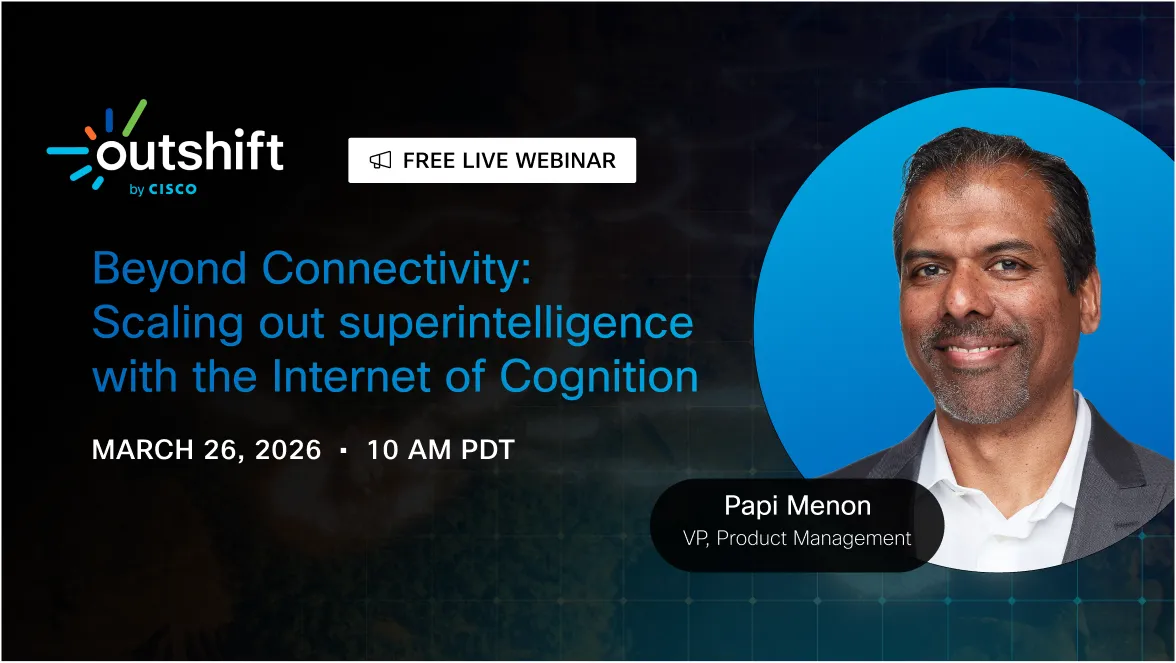
Register for webinar
Join us to see how the Internet of Cognition works in practice.
Still have questions? Register for a guided walkthrough to learn how distributed superintelligence unlocks better business outcomes, and to get answers for your specific needs.
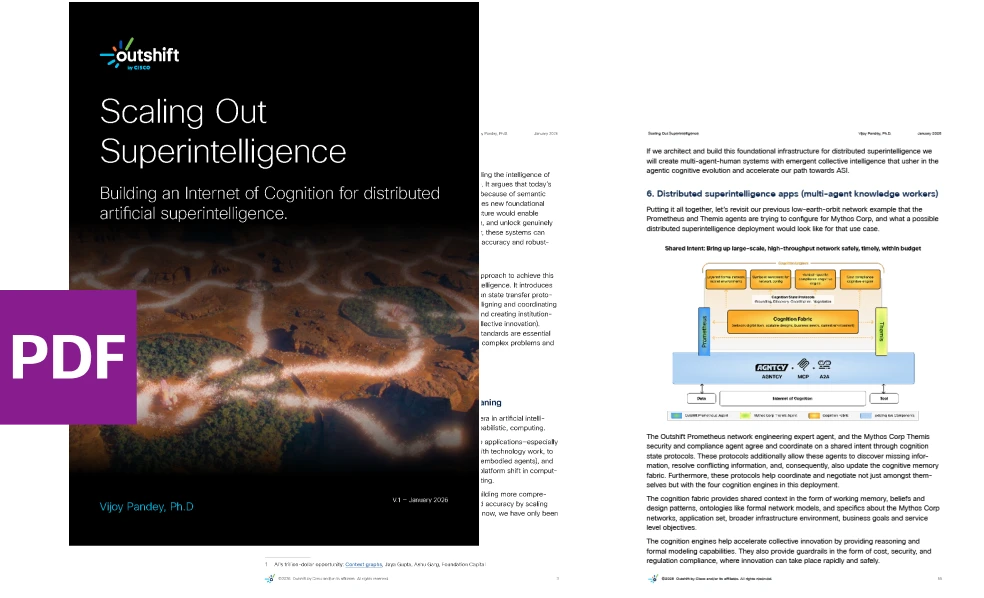
The Internet of Cognition is our blueprint for scaling out intelligence, together.
Agentic AI stands at an inflection point: powerful, yet siloed. Read the full paper on the Internet of Cognition to learn how we're expanding the power of multi-agent systems.